The Presidency Is Not a Prize: What Black University Presidents Owe the Future
thepulseinstitute
At a moment of financial pressure, technological disruption and leadership uncertainty in higher education, Black college and university presidents must become more than administrators of institutions. They must become architects of their future.
By Bankole Thompson
There is something seductive about a university presidency. The ceremonial installation, academic regalia, presidential residence, photographs with trustees and donors, honorary introductions and the place at the head of the commencement procession. The title itself carries prestige.
But the presidency of a college or university particularly an institution carrying the history and aspirations of Black America cannot be reduced to the successful culmination of one person’s professional journey.
The presidency is not a prize. It is a trust.
And at this moment, it is an extraordinarily demanding one. Higher education is confronting questions that cannot be answered by ceremonial leadership. Universities face financial pressures, changing enrollment patterns, technological disruption, debates over the value of a college degree, artificial intelligence, workforce transformation and intensifying competition for students and philanthropic investment.
Historically Black colleges and universities carry additional burdens created by generations of unequal access to capital. Research from UNCF has repeatedly documented financial pressures facing HBCUs, including endowment disparities, deferred maintenance and the continuing need to build institutional financial resilience.
Yet HBCUs remain extraordinary engines of educational and economic possibility. UNCF’s economic-impact research has documented billions of dollars in economic activity generated by these institutions and enormous lifetime earnings attributable to their graduates.
These institutions are not historical artifacts. They are strategic American assets. And that is precisely why expectations for those who lead them should be enormous.
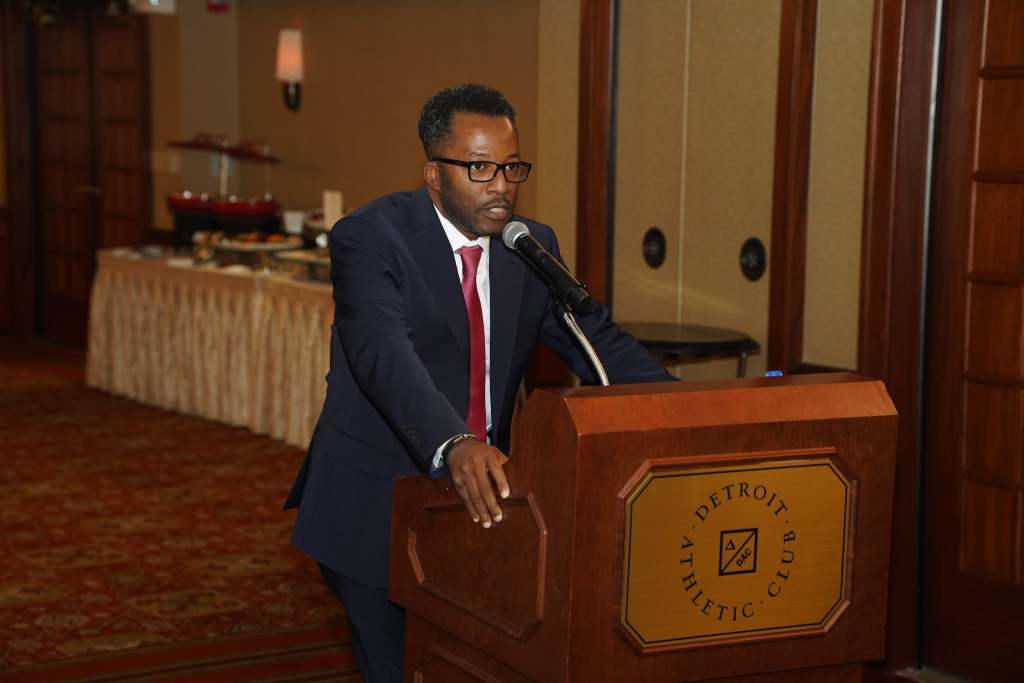
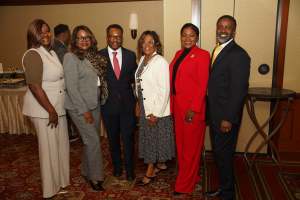
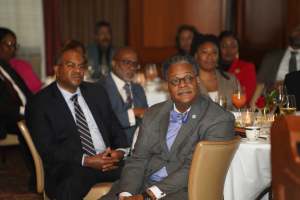
Bankole Thompson ( center) with fellows of the Thomas A Lakin Institute during their October 2025 dinner at the Detroit Athletic Club where Thompson addressed the fellows, some of whom were already college presidents and others were preparing to assume the role at their respective states.
A president must do more than preside
We should stop treating university presidents primarily as institutional ambassadors. Yes, presidents must raise money. They must engage trustees, recruit students, cultivate alumni, manage budgets, protect accreditation, resolve crises and represent the university before corporations, foundations, government and the public.
But those are responsibilities of the office. They are not a vision for the institution. A consequential university president must be able to answer a harder question: What will this institution become because you led it?
Not what building will bear your name. Not how elaborate the inauguration was. Not how many prominent people attended the annual gala. Not how many photographs appeared in the alumni magazine.
But rather what changed? What did you build? What intellectual distinction did the university acquire? What problem did the institution become uniquely qualified to solve? What new sources of revenue did you develop? What faculty did you attract? What scholarship did you encourage? What students did you prepare for a world radically different from the one into which you inherited the presidency? And most importantly: What institution did you leave behind? Those should be among the measurements of a presidency.
Innovation is no longer optional
The most dangerous phrase in higher education may be: This is how we have always done it. Institutions with enormous endowments can sometimes survive periods of unimaginative leadership. Institutions operating with far thinner financial margins cannot afford that luxury. Innovation for Black colleges therefore cannot be a fashionable word placed in a strategic plan. Innovation is a survival strategy.
A president confronting a limited endowment should be thinking relentlessly about new revenue models. A president confronting enrollment pressure should be studying demographics rather than waiting for applications. A president leading an institution in the age of artificial intelligence should already be asking what AI means for curriculum, research, administration and the professions for which students are being prepared.
A president should be examining partnerships with corporations without allowing the university to become intellectually subordinate to corporations.
A president should be looking at intellectual property, research commercialization, certificates, continuing education, international partnerships, online programs, shared services, real estate, entrepreneurship and new philanthropic models.
A president should understand the university’s balance sheet as seriously as its commencement program.
And an HBCU president should be asking an even more ambitious question: What can this institution become the best in America at doing?
Every university cannot be everything. But an institution can become indispensable in something.
One HBCU might become America’s preeminent center for artificial intelligence and racial equity.
Another could dominate research into Black maternal health. Another could become a national laboratory for teacher preparation in underserved communities. Another could lead the nation in research on water justice and environmental inequality. Another could become an incubator for Black entrepreneurship and intergenerational wealth creation. Another could establish itself as an indispensable center for democracy, constitutional history and civil rights.
History should provide HBCUs with identity. It cannot become an excuse for institutional stagnation. These institutions were created because somebody innovated against impossible circumstances in the first place.
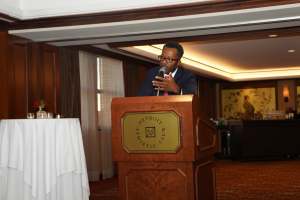
Bankole Thompson delivering a candid talk to college presidents at the Thomas A. Lakin Institute dinner in downtown Detroit.
Dr. Lawrence Edward Carter Sr., Dr. Hakim Lucas and the rebuilding of an institution
I have been thinking about these questions in conversations surrounding my forthcoming book and the people whose lives have been spent considering the relationship between education, leadership and human possibility.
Dr. Lawrence Edward Carter Sr., the founding dean of the Martin Luther King Jr. International Chapel at Morehouse College, has spoken to me recently with particular pride about the leadership of Dr. Hakim Lucas, the president of Virginia Union University.
Carter describes Lucas as a leader who has his pulse on the issues and someone attentive to the forces reshaping higher education while undertaking the difficult work of rebuilding an institution with a long and proud history of what Carter would view as Black negritude. The language is important.
Because rebuilding a historic Black institution should never mean abandoning the identity that made the institution necessary. Nor should honoring that identity mean refusing to change. That is the tension consequential HBCU presidents must navigate.
How do you modernize without surrendering memory? How do you innovate without becoming indistinguishable from every other university? How do you compete for students while preserving a distinctive intellectual mission? How do you build an institution for 2050 while remembering why somebody had to build it in the first place?
Virginia Union’s history makes those questions particularly resonant. The university traces its origins to 1865, when educational efforts were established in Richmond for newly emancipated Black Americans.
Today, Lucas leads an institution whose beginnings are inseparable from the transformation from slavery to citizenship. That kind of history is not simply material for an anniversary celebration. It is an inheritance demanding contemporary imagination.
The strongest university presidents understand that they are custodians of history only temporarily. Their greater responsibility is deciding what that history will produce next.
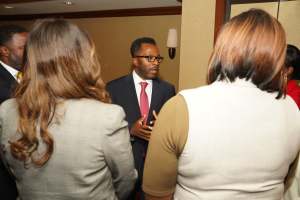
Bankole Thompson speaking with college presidents ahead of his dinner address for the Thomas A. Lakin Institute.
I put this challenge before future presidents
This is not a question I have only recently begun asking. In October 2025, I was invited to address the fellows of the California-based Thomas A. Lakin Institute for Mentored Leadership, an initiative devoted to preparing African Americans for the highest levels of leadership in community colleges.
The dinner was held at the Detroit Athletic Club and hosted by Wayne County Community College District.
Sitting before me were fellows preparing for college presidencies and some who had already become college presidents. I did not believe that moment called for another ceremonial speech congratulating accomplished professionals for ascending the leadership ladder.
I challenged them instead. Be vanguards of justice, not merely administrators. That distinction remains urgent for me today because America does not need Black college presidents whose principal accomplishment is efficiently administering institutions whose larger possibilities remain unrealized.
Administration maintains but leadership imagines. Administration asks whether the institution is functioning. Leadership asks what the institution should become. Administration manages the present. Leadership prepares an institution for a future that has not yet arrived.
And moral leadership asks something even harder: Who is being left behind while the institution advances?
A president of a college serving working-class, first-generation, economically vulnerable or historically excluded students cannot discuss leadership only in the vocabulary of enrollment, retention, facilities and fundraising. Those things matter enormously. But behind every statistic is a human being. Behind enrollment is aspiration. Behind retention is whether a student believes there is a future worth staying for. Behind financial aid is whether poverty will determine access to knowledge. Behind workforce development is whether education becomes a genuine instrument of economic mobility. That is why I used the language of vanguard to fellows of the Thomas Lakin Institute. The presidency should place someone at the leading edge of the institution’s encounter with society.
What is the intellectual identity of the institution?
There is another responsibility university presidents cannot delegate. A university must have an intellectual identity. Buildings are not a university. Branding is not a university. Athletics are not a university. Enrollment numbers alone are not a university. A university ultimately exists because of ideas. What questions are its faculty asking? What books are they writing? What research are they producing? What intellectual debates are occurring on campus? What professors are becoming nationally recognized authorities? What journals, institutes and centers are associated with the institution? What is being discovered there? What conventional wisdom is being challenged there? What is the university contributing to civilization’s storehouse of knowledge?
A president who raises millions of dollars but presides over intellectual mediocrity has not completed the assignment. Likewise, a brilliant academic leader who cannot develop the financial infrastructure necessary to sustain the institution has not completed it either. The modern presidency requires both intellectual seriousness and institutional entrepreneurship.
What Ashraf Esmail reminded me about Black colleges
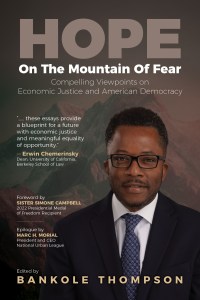
These questions have also been informed by my own work with scholars examining the possibilities of Black higher education. Dr. Ashraf Esmail of Dillard University contributed a chapter to my most recent book HOPE: On The Mountain Of Fear examining Black colleges and the potential they hold. The foreword to the book is written by Presidential Medal of Freedom Recipient Sister Simone Campbell and Marc Morial, the President and CEO of the National Urban League wrote the epilogue.
Esmail’s contribution reinforced something that should be central to how we think about HBCUs: Their significance cannot rest solely upon what they have meant historically. Their future depends upon what they can become intellectually. There is no question about what HBCUs have given America. The harder question is what America has not yet imagined they could give it. An institution can become so consumed with protecting its legacy that it fails to create its next one. The greatest tribute to the founders of Black colleges is therefore not institutional nostalgia. It is institutional audacity.
William Anderson understood what institutions are for
That brings me to the late Dr. William G. Anderson. I recently stood before his family and those gathered to mourn him and delivered his eulogy at the funeral service held Aug. 25 at the Empowerment Church in Southfield, Michigan.
Anderson was 98.
He had been a physician, educator and civil rights leader. He led the Albany Movement, worked alongside Rev. Dr. Martin Luther King Jr. and became the first African American president of the American Osteopathic Association and spent decades connected to medical education at Michigan State University.
But what strikes me increasingly about Anderson is that he did not allow the great achievements of his youth to become the only story of his life. He kept building.
Anderson was a founding faculty member of the Michigan State University’s College of Osteopathic Medicine, where he also helped establish the lecture series that eventually became the Dr. William G. Anderson Lecture Series: Slavery to Freedom, creating an enduring forum connecting history, civil rights, education and contemporary public life.
Think about what that represents. The civil rights leader became an institution builder. He did not spend the remainder of his life simply telling audiences what he had done in Albany. He converted memory into infrastructure. He converted experience into education. He converted achievement into opportunity for another generation. That is leadership. And that is where the university presidency becomes morally consequential.
The empty chair returns
I titled Anderson’s eulogy “William G. Anderson And The Empty Chair At The Constitutional Convention Of 1787.” The empty chair represented those absent when America’s constitutional architecture was being constructed including Black people, women, Native Americans and others denied an equal role in defining the nation’s original conception of freedom.
But the empty chair has another meaning for higher education. For generations, Black people were denied seats in many of America’s universities. They were denied admission, professorships, presidencies and the opportunity to participate fully in the intellectual construction of the nation.
HBCUs emerged partly because other doors remained closed. They created their own chairs.
Today Black scholars occupy professorships throughout American higher education. Black administrators lead major institutions. Black presidents sit in offices that previous generations could scarcely have imagined occupying. That is progress.
But history eventually turns the question around. Once the chair becomes available: What are we doing with it?
A president can occupy the chair without filling it. Prestige can occupy the chair. Ceremony can occupy the chair. Career advancement can occupy the chair. A photograph can show someone sitting magnificently in the chair. But leadership requires more.
To fill the chair is to leave the institution stronger than you inherited it. To fill the chair is to build financial resilience. To fill the chair is to attract exceptional faculty. To fill the chair is to prepare students for professions that do not yet exist. To fill the chair is to create centers of intellectual excellence. To fill the chair is to make difficult decisions before financial crisis makes them for you. To fill the chair is to challenge trustees when necessary. To fill the chair is to understand that tradition and innovation are not enemies.
To fill the chair is to be what I challenged those Lakin fellows to become: a vanguard rather than merely an administrator. And above all, it is to understand something every president should remember: The university does not belong to the president. The president temporarily belongs to the university.
Fellows of the Thomas A. Lakin Institute listen to Bankole Thompson deliver a talk at their leadership dinner October 2025.
HBCUs cannot survive on reverence
We must be particularly demanding about historically Black colleges because their survival matters too much for sentimentality. We can love an institution and still demand more from it. Indeed, serious love requires accountability. Historic undercapitalization is real. Financial inequality is real. The pressures confronting smaller colleges are real. But acknowledging structural disadvantage cannot become permission for unimaginative leadership.
A large philanthropic gift can provide capital but it cannot provide imagination. Money cannot determine what an institution should become. Money cannot establish intellectual identity. Money cannot create institutional courage. Money cannot make a president innovative. Those responsibilities belong to leadership. And leadership turnover should force boards to ask something deeper than who possesses the résumé necessary to occupy the office. What kind of leader does this institution need for the next 20 years?
Perhaps the answer is an intellectual entrepreneur, institution builder, fundraiser who understands ideas, scholar who understands balance sheets, executive who understands students and someone capable of walking into a corporate boardroom in the morning, defending academic freedom in the afternoon and sitting with struggling students that evening without considering any of those responsibilities beneath the office. The presidency requires range. It also requires courage.
Stop merely managing decline
The most dangerous university president is not necessarily the leader who makes a mistake. Innovation involves mistakes. The more dangerous leader may be the president who makes almost none because he or she attempts almost nothing.
Universities facing financial pressure cannot simply cut their way into greatness. They cannot celebrate their way into solvency. They cannot market their way into intellectual distinction. They must build.
Some programs may need to close. Others may require dramatic investment. New partnerships must be created. Old assumptions must be abandoned. Faculty entrepreneurship should be encouraged. Alumni should become not merely annual donors but intellectual and economic partners. And presidents must ask questions their institutions may initially dislike: What should we stop doing? What should we do better than anybody else? What assets are we underusing? What academic programs belong to yesterday? What disciplines belong to tomorrow? What will artificial intelligence require of our graduates? Where will our students work in 2040? What does our institution possess that the world actually needs? Those are presidential questions.
Bankole Thompson’s latest book, HOPE: On The Mountain Of Fear.
The presidency is borrowed power
Perhaps that is one of the lessons Anderson’s life leaves for higher education. He possessed titles.
Physician. Professor. Civil rights leader. National professional leader. But the titles were never the destination. They were instruments. That distinction is worth recovering in this column.
University presidents should understand that the office they occupy is borrowed power. The chair existed before them. If the institution survives, it will exist after them. The question is what happened while they occupied it.
Did the institution become financially stronger? Did scholarship deepen? Did students flourish? Did faculty excellence increase? Did new ideas emerge? Did the university acquire a clearer intellectual identity? Did the president build something capable of surviving the presidency? Did the leader simply administer history or create some? Those are questions worthy of the office.
Because the great challenge confronting Black higher education is no longer simply whether these institutions can survive. The challenge is whether they can lead, innovate, anticipate and can become indispensable centers of research, entrepreneurship, technology, democratic thought, culture and human development.
It is whether their presidents will regard themselves not as caretakers of glorious histories but as architects of futures not yet imagined. William Anderson’s generation fought to open doors and then spent lifetimes building institutions behind them.
The fellows I addressed at the Lakin Institute represent another generation now being entrusted with those institutions.
Dr. Lawrence Carter’s pride in the work of Hakim Lucas points toward what should matter in assessing their leadership: not simply that a Black president occupies an historic office, but whether that leader understands the moment, rebuilds the institution and prepares it for what comes next.
The chair is occupied. That is no longer enough. The presidency is not a prize for having arrived.
It is borrowed power, entrusted for a season, with one unforgiving question attached to it: What did the institution become because you were there?
Bankole Thompson is a nationally acclaimed journalist, author, keynote speaker and public intellectual whose work interrogates power, democracy and economic justice. He is founder and chairman of The PuLSE Institute and a twice-weekly opinion columnist at The Detroit News. In June, Thompson delivered the opening Juneteenth keynote address at the 2026 National Civil Rights Conference in Detroit addressing, “The Battle for America’s Story: Media, Power and Economic Justice.” His forthcoming seventh book is titled, Bankole Thompson’s 12 Moral Questions: Frederick Douglass and the Soul of America at 250. Dr. Lawrence Edward Carter Sr., founding dean of the Martin Luther King Jr. International Chapel at Morehouse College wrote the foreword to the book. He can be reached at bankole@bankolethompson.com