


THE PuLSE INSTITUTE | MICHIGAN POVERTY FORUM SERIES
The 2026 Governor’s Race and the Poverty Question We Cannot Ignore
EDITOR’S NOTE | Bankole Thompson, Editor-in-Chief, PuLSE Ideas & Commentary
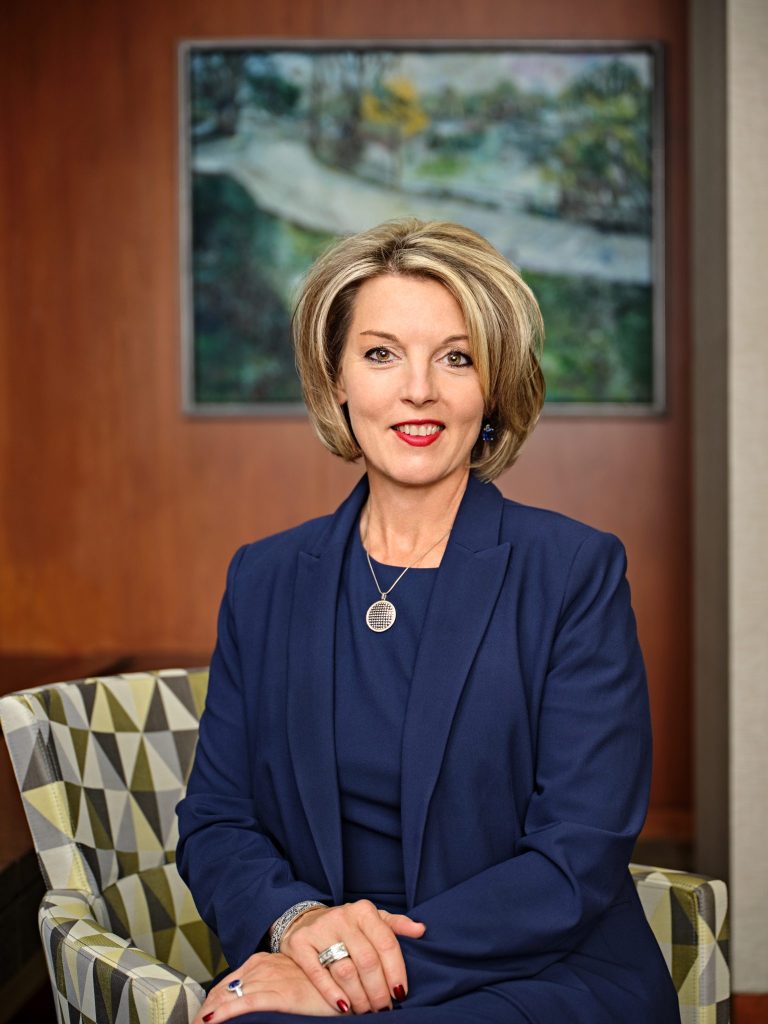
Tricia Keith, President and CEO of Blue Cross Blue Shield of Michigan, brings to The PuLSE Institute’s Michigan Poverty Forum the perspective of a leader overseeing one of the state’s major healthcare institutions. Keith argues that Michigan’s challenges in health, poverty, education and economic mobility cannot be separated and challenges the state’s next governor to make opportunity a statewide priority.
By Tricia Keith
President & CEO
Blue Cross Blue Shield of Michigan
One of my favorite life and leadership mottos is, “The world is run by those who show up.”
It means being present in the moment, being active and engaged, and sometimes, it means confronting uncomfortable facts.
Michigan is at one of those moments—an inflection point that requires our leaders to “show up” and band together to solve our state’s challenges.
Our next governor will inherit no shortage of immediate challenges. But the most important measure of that governor’s success will not be any single budget, program or economic development announcement. It will be whether more Michiganians have a genuine opportunity to build healthy, secure and prosperous lives.
That requires us to confront poverty and economic inequality not as isolated social problems, but as issues deeply connected to Michigan’s health and economic future.
The numbers paint a difficult picture of our state’s slide in key rankings:
Over the past 25 years, Michigan has fallen to 40th nationally in per-capita income, 39th in labor force participation, 49th in population growth and 50th in both GDP growth and job growth. Our challenges also extend to education, where Michigan ranks 44th in fourth grade reading and 33rd in the percentage of our population with a college degree.
These are not random rankings, and these are not Democrat or Republican issues. They are Michigan issues that affect families and communities all across our state every day.
Our next governor should approach them that way.

Health Begins Before the Doctor’s Office
At Blue Cross Blue Shield of Michigan, our work in communities across the state has reinforced an important lesson: our commitment to health extends beyond paying for healthcare.
Health is shaped long before someone enters a doctor’s office. Food access, safe places to be active, behavioral and maternal health support, chronic disease prevention and access to primary care all matter. Poverty makes each of those barriers harder to overcome.
That is why Michigan’s next governor should view health policy, economic policy and opportunity as interconnected. We need government, employers, health plans, providers and community organizations working together to make preventive care easier to access and address the conditions that influence health.
Reaching People Who Need Support Most
Our Medicaid health plan, Blue Cross Complete, is an important part of that commitment. It provides comprehensive healthcare coverage to approximately 285,000 Medicaid beneficiaries in 58 counties across Michigan’s Lower Peninsula. Blue Cross Complete combines that coverage with community resources and support to help members get the care they need.
Many Medicaid members are balancing their health with other socioeconomic challenges. Blue Cross Complete works to connect members with healthcare and community resources that can help address barriers to better health, working alongside providers and community organizations to reach people who may have limited access to care.
That work reflects a simple principle: People are better able to focus on their health when their basic needs are within reach.
Strengthening Medicaid and the community organizations around it is essential to improving health outcomes and expanding opportunity in underserved communities.
That same principle guides our broader social mission. Through our Strengthening the Safety Net program, community clinics have provided more than 2 million medical, dental and behavioral health visits to more than 250,000 uninsured and underinsured Michiganians since 2005.
Our Building Healthy Communities program reached more than 45,000 students in 112 schools in 2025, more than half in low-income areas. And through our new nutrition campaign, Power Your Health, we are working to make healthy eating more accessible and achievable.
These efforts meet people where they are and align organizations around a common interest. Health, education, food access, workforce development and economic opportunity are not unrelated challenges. They are interconnected investments in Michigan’s future.
Affordability Is an Economic Issue
Healthcare affordability also directly affects economic security. For families already struggling to make ends meet, costs that can reach $27,000 a year for a family of four create another barrier to getting ahead.
No single organization can solve that equation. Health plans, hospitals, physicians, pharmaceutical companies, employers, policymakers and consumers each have a role to play. To improve outcomes and lower costs, the system works best when we work together.
Show Up, Listen and Align Around What Matters
Another favorite leadership motto of mine is, “Great things happen when self-interests align,” and our social mission and affordability efforts reflect what can happen when organizations show up with shared purpose—organizations like The PuLSE Institute.
The PuLSE Institute is raising these issues through the Michigan Poverty Forum, a new initiative of PuLSE Ideas & Commentary, the editorial platform of The PuLSE Institute, the national and independent anti-poverty and economic justice think tank based in Detroit.
Michigan needs that same spirit of shared responsibility.
Government can’t eliminate poverty alone. Neither can business, healthcare, philanthropy or the nonprofit community. But together, we can listen to communities, invest in solutions and stay focused on the common interest.
Our next governor should set clear expectations for progress and bring people together to meet them.
Show up. Align interests. Invest in what works. And build a Michigan where everyone has the opportunity to be healthy, contribute and thrive.
That’s a Michigan worth building together.