

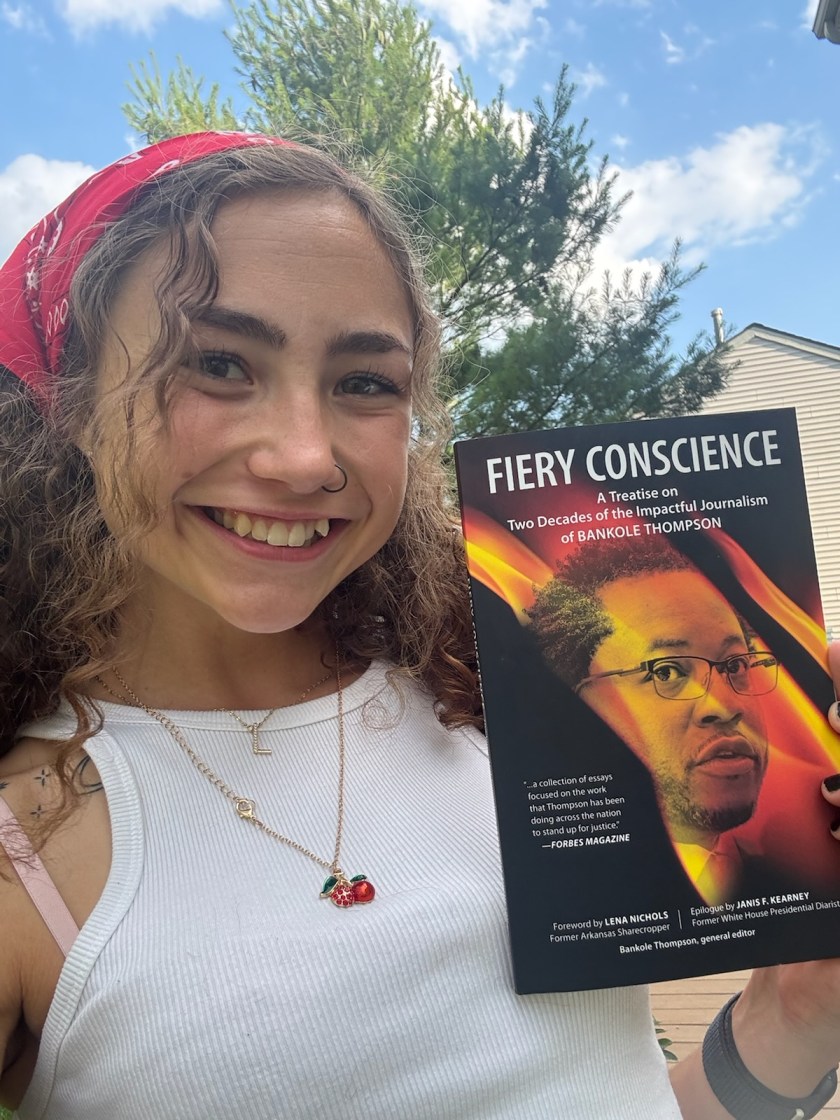
Book Review
By Lillie Holtz
Eastern Michigan University Student
Bankole Thompson, a nationally acclaimed Detroit journalist and standard-bearer for economic justice issues, is one of the pioneers for equality and change in my generation that we are in desperate need of as a society. Focusing on issues surrounding poverty and race and as the founder and dean at The PuLSE Institute, the national and independent anti-poverty think tank, he calls into light the injustices that others have tried to keep in the dark. Thompson is also a twice-a-week opinion columnist at The Detroit News, and host of the podcast, Bankole’s Nation.
In his fifth book, Fiery Conscience, he presents a forceful and righteous view on the ethical and civic duty of journalism in democracy today. In the book, not only is he, but other contributors to the book are all aligned with the notion that where there’s a passion, there’s the opportunity to create the fire of change, and that is just what Thompson is doing.
Published in August of 2023 by PuLSE Global Publishing, Fiery Conscience, is a collection of varying powerful accounts from individuals who have been part of events that reinforce the need for the kinds of social change that Bankole Thompson is determined to make. Not only does this book show the number of lives Thompson has left his imprint on, but it is a call to action-from the roots of the true purpose of journalism, to transform our fiery consciences into burning change. To be talking about the injustices that others shy away from, Thompson, is himself and inspiring others to challenge systemic transgressions that are far too often swept under the rug.
This compilation of narratives deriving from nearly two decades of Thompson’s career ranges from academic to poetic. Reflecting the true meaning of having a fiery conscience, the amplification of marginalized voices is an integral part of understanding the issues at present from various backgrounds. Each essay covers different aspects of Thompson’s career, from battling Detroit and regional politics to giving perspectives on need for bold and courageous Black leadership as well as national-level democracy.
Thompson has never backed down from a hard fight or tough conversation. Calling out issues such as racial injustice, economic inequality, accountability in public leadership, and the lack of independent journalism, he demonstrates the multi-faceted mosaic of complexities and injustices within society.
Adding on to the meaningful message of this publication, Thompson, whose work follows in the tradition of the 19th century abolitionist and prophet of freedom Frederick Douglass, makes the assertion that journalism runs deeper than just being a day job or simple career; it runs so much deeper than that. Journalism is a mission rooted in the moral obligation to the truth and it must serve as a haven for the oppressed and a source of discomfort for the too comfortable.
In his unapologetic writing, he will unwittingly critique political leaders, the media connivance, and institutional failures while urging those reading to rise with him. His unfettered drive to speak the truth, even though it comes with its own unique set of challenges, is a key factor that he believes in facilitating meaningful change.
The multidimensional approach spans outside the realm of being a collection of testimonies but also a tribute. In affinity with great global civil and human rights leaders before him, such as Nelson Mandela and Dr. Martin Luther King Jr., Bankole Thompson unifies journalism with the archival tradition of storytelling which builds empathy and community. Each page is a fraction of people’s stories, no alterations, no whitewashing, just the truth. Not only does each narration provide an awakening for civil engagement but also for moral change and self-reflection. The flow from each account creates a unique experience in which one begins enacting moral audits as they read.
Thompson dares to question: What roles do we have in sustaining or changing injustice? What role does the truth play? What do we owe to the truth? What can we do to make a change?
This book is quite impactful for any audience in the varying motifs these writings cover. Connecting history to current events builds the credibility for the insistence that change needs to happen, and it needs to happen now. Contributors in the book such as Janis Kearney, the nation’s first White House presidential diarist under President Bill Clinton, and Herb Boyd, the nationally renowned journalist, author and historian, aid in the reminder that progress is ongoing. In the words of Thompson, “we are not at the mountaintop.”(Thompson page 8). Embarking on the journey to justice and quality is no small feat, but as others can attest, Thompson will stand fearlessly and persistently on the side of truth and greater morals.
Fiery Conscience is more than a collection of tributes, reflections, and narratives, but also a calling to readers to reconsider the shade of lens they choose to carry throughout their lives. Through the bridging of activism and journalism comes the opportunity to not only inspire but unite those who feel the fire in their belly. Having the courage to stand up against the wrongs in society is half of the battle, for silence is merely the same as acceptance.
Lillie Holtz, will graduate in December of this year from Eastern Michigan University with a BA in women and gender studies and a minor in both psychology and public administration. She has strong interest in issues of equality and social justice.
