


By Tricia Keith
An expectant mother facing long wait times for a checkup. A retired grandfather navigating a complex diagnosis, doctors and prescriptions. A small business owner balancing their budget with the increasing costs of providing benefits.
These are just a few of the countless real-world examples underscoring the importance of healthcare affordability and access, which impacts employers, families and communities every day.
At $5.3 trillion, health care now accounts for 18% of our nation’s GDP — that’s more than twice the total GDP of Canada. The cost of health care for the average family of four hit $27,000 in 2025, while the per-employee cost of health care to employers reached $17,000. That dramatically impacts affordability and access to quality health care.
A recent survey by the Small Business Association of Michigan found that over 40% of small businesses surveyed said they were considering dropping benefits of their employees in the next few years, while 75% said they were delaying hiring because of the cost of health benefits. That has a real impact on Michigan’s economy, and a real impact on families.
At Blue Cross Blue Shield of Michigan, we’ve made it our mission to provide affordable access to health care for 87 years and counting. We proudly provide coverage in all 83 counties in Michigan, with nearly 5 million members in our state and beyond carrying our card.
But the affordability issue is also an equity issue. A health care system can’t just work for people with the extra time or flexibility to absorb higher costs and sudden changes to their plans or providers. It has to work for people with lower incomes, chronic conditions, or limited options when care becomes harder to access or afford.
We were pleased to sign an important new agreement with Michigan Medicine recently, preserving access to care for nearly 300,000 people across southeast Michigan. And importantly, our agreement rewards outcomesrather than volume of services.
For too long, healthcare has rewarded volume. More services. More spending. Not always better outcomes. That approach has pushed prices higher and higher, with hospital costs increasing more than three times the rate of inflation since 2000.
We need to pay for value instead. Better care with stronger coordination and real discipline around cost. Value-based care contracts help move the system in the right direction.
Since the start of 2025, we’ve signed nine of these value-based contracts with hospitals across the state, including the three largest health systems in Corewell Health, Henry Ford Health and now Michigan Medicine. This is an important step to controlling health care costs, as hospitals account for 47 cents of every premium dollar our members pay.
On our website MIBlueDaily.com/Affordability, we’ve been transparent about where premium dollars go. In 2025, we paid out $1.02 for every dollar we collected. That’s not sustainable.
Transforming how care is paid for is something Blue Cross has been driving for more than 20 years, through our Value Partnerships program. That effort has helped save $6.3 billion in unnecessary medical expenses. Today, the program includes more than 100 hospitals and 25,000 physicians across the state.
This is not new work. But the urgency has changed.
The Michigan Medicine agreement shows what this work takes. It required candid conversations about cost and affordability. The result is a long-term agreement that keeps Michigan Medicine in-network and keeps care within reach.
It also brings stability for communities, protecting access to a critical system of care and reducing the risk of disruption. For patients, access is not just about availability, it’s about continuity.
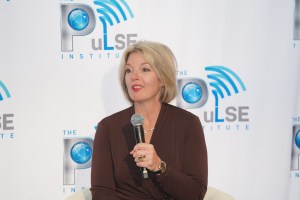
That’s why this conversation belongs in forums like The PuLSE Institute. It keeps attention on cost, access and equity where they intersect in people’s lives. It also reflects the broader economic issues PuLSE continues to raise, where healthcare affordability influences financial stability for families and communities.
Across Detroit and across Michigan, these issues show up in real decisions people make every day, including whether they can stay with their doctor, fill their prescriptions, or continue needed treatment.
We’re showing up, too. We’re fighting for affordability and partnering with providers, hospitals, and pharmaceutical companies to make health care more accessible, affordable and equitable. We’re also working hard as an organization to transform our business, controlling our own costs, targeting $600 million in administrative savings by year-end.
We’ve made great partners and great progress toward our affordability goal. But we realize we have much work yet ahead, and while it won’t be easy, it is necessary.
Ultimately, this isn’t about contracts or payment models. It’s about whether a mother can get a timely checkup, a grandfather can navigate his care with confidence, and if a small business owner can continue to offer coverage to their employees. That’s the standard we should be holding the system to — and that’s the work ahead for all of us.
Tricia A. Keith is president and CEO of Blue Cross Blue Shield of Michigan. For more, visit MiBlueDaily.com/Affordability. For submission inquiries send an email to The PuLSE Institute at info@thepulseinstittute.org
