

THE PuLSE INSTITUTE | MICHIGAN POVERTY FORUM SERIES
The 2026 Governor’s Race and the Poverty Question We Cannot Ignore
EDITOR’S NOTE | Bankole Thompson, Editor-in-Chief, PuLSE Ideas & Commentary
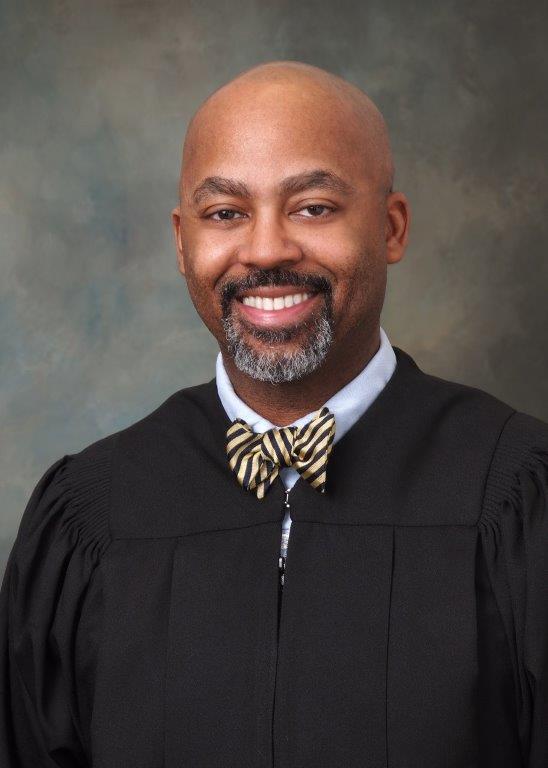
I invited Chief Judge William C. McConico of Detroit’s 36th District Court to contribute an essay to The PuLSE Institute’s Michigan Poverty Forum examining what Michigan’s next governor owes those living in poverty. His contribution brings an important judicial perspective to the statewide conversation, underscoring that poverty is not merely an economic condition but a fundamental question of justice, fairness and human dignity.
By Chief Judge William C. McConico
36th District Court, Detroit
Justice is the foundation of any civil society or thriving community. Power that only flows in one direction is an injustice that tears at our social fabric. The job of our courts is to strike a balance, protecting the rights and upholding the duties of every individual who comes before it. One of the most important issues that a judge must balance is the issue of poverty. While economic policy is not the province of the courts, it directly affects its functions in profound ways.
Poverty is often framed as if it were a mathematical equation, solved by simply moving some numbers around. From my perspective as Chief Judge of the 36th District Court in Detroit, I see firsthand that poverty is also a matter of justice. It profoundly shapes individuals’ experiences within the legal system and their access to fairness, opportunity, and dignity.
Our Court is where the issue of affordability is perhaps most glaring. Almost every docket is touched by the issue.
Our civil docket reflects these challenges. We have experienced a substantial increase in filings involving unpaid debts and vehicle repossessions. Behind these cases are people struggling with credit card payments, car loans, and other obligations as the cost of living places greater pressure on household budgets.
When people cannot pay their bills, the consequences extend beyond debt. Losing a vehicle can mean losing the ability to get to work. A judgment can compound financial stress, turning a temporary setback into a prolonged crisis. Courts must provide fair and impartial processes for resolving disputes, but policymakers must recognize that economic instability eventually reaches our courtrooms.
We have taken some steps in the right direction. Detroit’s Right to Counsel program demonstrates how protecting the rights of those facing financial hardship is to the benefit of all. Since 2019, eviction outcomes have improved, including a substantial decline in completed eviction cases resulting in writs of eviction. This has led to more stable communities, cost savings, and fairer outcomes. However, affordable housing remains difficult to secure, and homelessness continues to trouble our city.
The next governor should build on this progress by supporting eviction prevention, affordable housing, homelessness services, and collaboration among courts, legal aid organizations, and community providers. Keeping people housed supports employment, children’s education, public health, and stronger neighborhoods.
The 36th District Court is also helping lead the way in bail reform, demonstrating that fairness and public safety are not competing priorities. Our efforts seek to ensure that people are not detained simply because they cannot afford bail when they do not present a risk of flight or danger to the public. Instead, we emphasize individualized decisions based on each case rather than a person’s financial resources.
Our experience has been encouraging. Since implementing these reforms, we have not seen an increase in crime attributable to our bail reform measures. Detroit has also experienced declines in violent crime during this period. Although crime trends have many contributing factors, our experience challenges the assumption that reducing reliance on cash bail necessarily makes communities less safe.
A person detained before trial because they cannot afford bail may lose a job, fall behind on rent, or become unable to support their family before the underlying charge has been resolved. Bail decisions must prioritize public safety, court appearances, and the circumstances of each case. Reform does not mean automatic release regardless of risk. It means making informed decisions without allowing poverty alone to determine whether someone remains incarcerated.
Michigan’s next governor should support evidence-informed pretrial policies that protect constitutional rights while preserving public safety. Detroit’s experience offers an important lesson—we can build a justice system that is both fairer and safer without making a person’s ability to pay the price of their freedom.
Poverty also intersects with challenges that punishment alone cannot resolve, including substance use disorders, mental health conditions, homelessness, and human trafficking. Through drug treatment, mental health, veterans’ treatment, and other specialty courts, the 36th District Court connects eligible participants with treatment, supervision, and support.
Street Outreach Court, for example, helps people experiencing significant challenges resolve certain legal matters while connecting them with services and working toward housing stability. These programs recognize that accountability and treatment can work together to help people rebuild their lives.
Michigan’s next governor should recognize specialty courts as an investment in public safety and rehabilitation. Sustained resources, trained professionals, and community partnerships can help participants achieve stability while benefiting their families and communities.
Courts cannot solve poverty alone. Judges must remain independent and impartial, applying the law fairly to everyone. However, state government can address the economic and social conditions contributing to housing instability, unpaid debts, unnecessary detention, and repeated involvement in the justice system.
Michigan’s next governor should bring courts, local governments, service providers, and community organizations together around practical solutions. We should measure progress by whether fewer families lose their homes, people can resolve legal obligations without sacrificing basic necessities, and treatment programs help participants build stable lives.
Justice does not end when a hearing concludes. It also depends on whether people have a realistic opportunity to move forward.
A stronger Michigan is one where financial hardship does not become a permanent barrier to housing, freedom, opportunity, or dignity. Addressing poverty must be central to our state’s vision for public safety, economic growth, and equal justice. Michigan’s next governor should understand that these goals are inseparable.
