

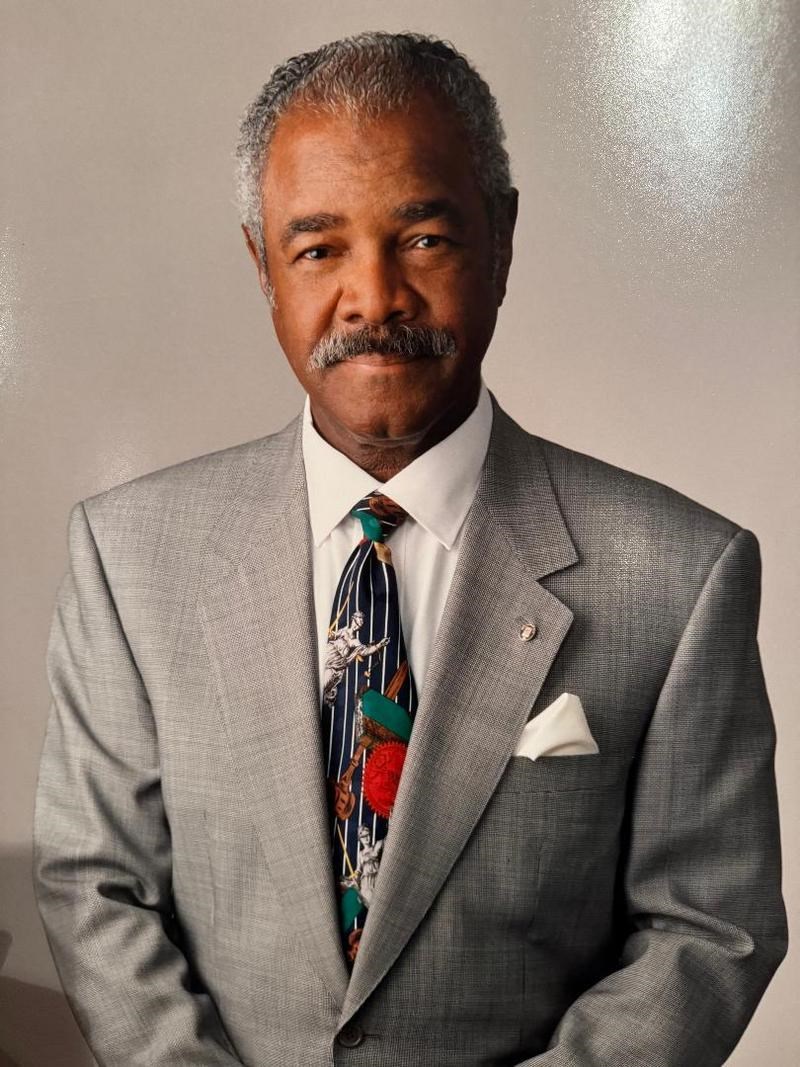
Family-led digital archive preserving Anderson’s extraordinary legacy as a pioneering physician and leader of the historic Albany Movement who worked directly with Dr. Martin Luther King Jr. prominently features the eulogy delivered by nationally acclaimed journalist, author and public intellectual Bankole Thompson.
As Americans gather around their Thanksgiving tables this week, it is worth remembering those whose extraordinary sacrifices made it possible for more people to have a seat at the American table.
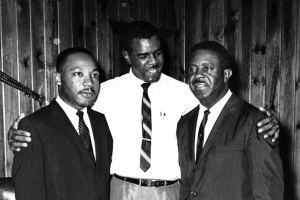
Among them was Dr. William G. Anderson, the pioneering physician, surgeon and civil rights giant who led the historic Albany Movement in Georgia, working alongside Rev. Dr. Martin Luther King Jr. and Rev. Ralph David Abernathy in the battle against Jim Crow. Anderson died earlier this year at age 98.
More than six decades after Anderson confronted the machinery of racial segregation in Georgia, that same state elected Keisha Lance Bottoms as its next governor in the midterm election, making her the first Black woman in American history elected to lead a state.
The historical significance of that election cannot be fully appreciated without remembering the generations of freedom fighters whose sacrifices helped dismantle the institutional barriers to Black political participation. Anderson’s crusade in Albany was part of that larger historical foundation.
The doors of political power through which subsequent generations have walked were once the very doors against which Anderson and his contemporaries pressed their demands for recognition.
In the spirit of Thanksgiving, The PuLSE Institute, the national and independent anti-poverty and economic justice think tank based in Detroit, is sharing with the nation the Dr. William G. Anderson Legacy Project, an important digital archive led by his granddaughter, attorney Erika D. Henson, dedicated to preserving his extraordinary life and contributions to American democracy.
Explore the Legacy Project: https://wganderson.site/
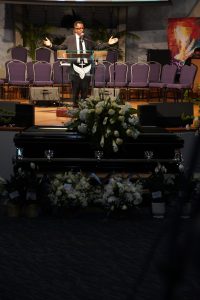
Prominently featured in the archive is the eulogy delivered by nationally acclaimed journalist, author and public intellectual Bankole Thompson, 47, at Anderson’s funeral service on August 25, 2026, at Empowerment Church in Southfield, Michigan.
Titled “William G. Anderson and the Empty Chair at the Constitutional Convention of 1787,” Thompson’s tribute examines Anderson’s extraordinary journey through the lens of America’s founding contradictions and the enduring struggle for human dignity.
Both the written tribute and its video recording are accessible through the archive, alongside historic civil rights footage, congressional testimony, Anderson’s Library of Congress oral history, his 1985 Eyes on the Prize interview and the 1962 Albany Manifesto.
In a personal invitation to Thompson this week, Henson acknowledged the significance of his contribution to preserving her grandfather’s legacy.
“Your moving eulogy is an important part of that legacy,” Henson wrote.
“Thanksgiving should invite us to remember not only what we have, but also those whose sacrifices made what we have possible,” Thompson said. “Erika Henson is doing more than preserving the memory of her grandfather. She is safeguarding a portion of America’s moral inheritance.”
Anderson, the first African American president of the American Osteopathic Association and a founding faculty member of the Michigan State University College of Osteopathic Medicine, occupied a distinctive place in American history at the intersection of medicine, civil rights and the struggle for equality.
In 2001, Anderson established what would become one of Michigan State University’s most distinguished civil rights educational traditions. The university subsequently named the initiative in his honor: the Dr. William G. Anderson Lecture Series: Slavery to Freedom — An American Odyssey.
A distinctive undertaking in American higher education, the series stands among the nation’s university-based lecture programs expressly dedicated to examining the historical burden of slavery and the enduring quest for freedom within the American democratic experiment.
For more than two decades, the prestigious lecture series has brought generations of students, scholars and the broader public into conversation with many of the most consequential figures of the American Civil Rights Movement, including the late Congressman and civil rights icon John Lewis and internationally celebrated humanitarian and civil rights statesman Harry Belafonte.
Anderson, a longtime admirer of Thompson’s journalistic work, personally invited him to serve as keynote speaker for the 20th anniversary of the series in February 2020 at Michigan State University. Thompson’s address was titled “Black Lamentations: The Redemptive Need for Healing in American Democracy.”
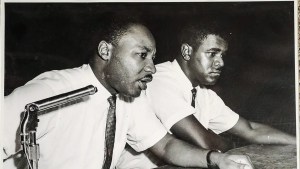
Six years later, Thompson delivered the eulogy for Anderson’s funeral, a tribute now preserved as part of the digital archive documenting the life and legacy of one of the architects of the American Civil Rights Movement.
Thompson, founder of The PuLSE Institute and a twice-weekly opinion columnist at The Detroit News, was the first journalist in American history to serve on the National Board of Directors of the Southern Christian Leadership Conference (SCLC), the historic civil rights organization co-founded by King.
The PuLSE Institute encourages universities, medical schools, libraries, civil rights organizations, educators and families across the nation to explore and share this important historical resource on Thanksgiving Day and beyond.
As we take our seats at the Thanksgiving table, let us remember those who refused to accept that freedom was the exclusive inheritance of a privileged few.
For gratitude is not merely an expression of appreciation for what we have inherited. It is also a responsibility to preserve what must never be forgotten.
VISIT THE DR. WILLIAM G. ANDERSON LEGACY PROJECT
